Fixed payments
Predictable monthly amounts make budgeting easier than revolving credit-card balances.
Borrowing guide
When borrowing helps, when it hurts, and how to compare offers so “fast cash” doesn’t cost you for years.
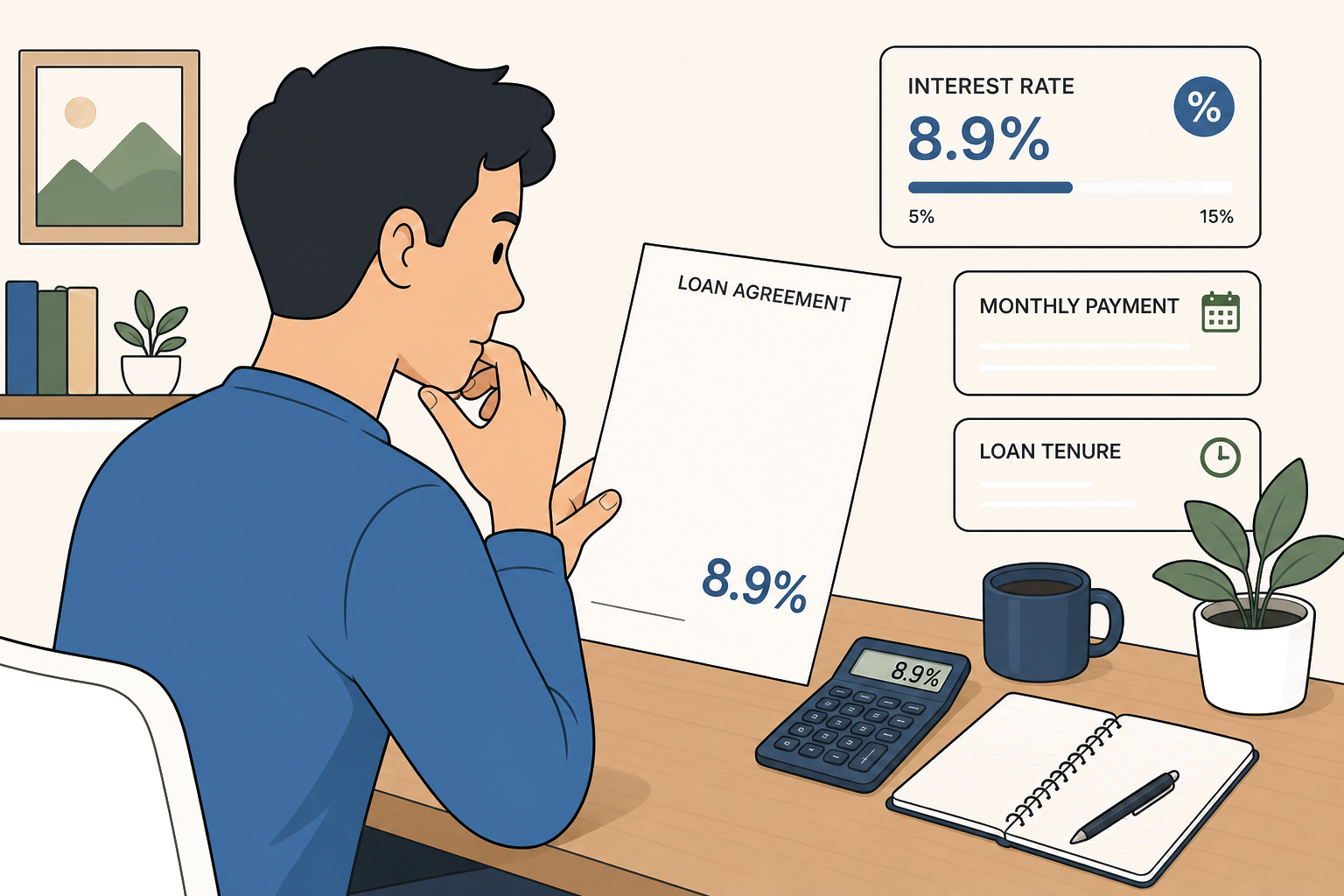
A personal loan is typically a fixed-amount, fixed-payment installment loan — often unsecured (no house or car as collateral). You receive funds up front and repay over a set term with interest.
Predictable monthly amounts make budgeting easier than revolving credit-card balances.
APR includes interest (and sometimes fees). Origination fees can raise the true cost — always ask.
Stronger credit usually means lower rates. Soft prequalifies help you shop without a hard pull on every inquiry.
Some loans use collateral (like a CD or vehicle). Rates may be lower, but you risk the asset if you miss payments.

Know exactly what the money is for and how the payment fits your budget before you apply.
Compare banks, credit unions, and reputable online lenders. Look at APR, fees, term, and monthly payment together.
Larger loans mean more interest. Don’t inflate the amount “just in case.”
Longer terms lower the payment but raise total interest. Choose the shortest term you can afford reliably.
Origination fees, prepayment penalties, late fees, and autopay discounts can change the deal.
Paying off cards then running them back up is how consolidations fail. Pair the loan with a budget and spending plan.
Often competitive rates and member-focused service — worth checking if you qualify.
Fast quotes and funding; still compare fees and customer support carefully.
Existing customers sometimes get discounts — ask, then still shop around.
Can improve approval odds, but put the cosigner’s credit and finances at risk.
This guide is general education, not a loan offer or credit decision. Eligibility and rates depend on your credit and the lender.
Affiliate lender slots can be added later — start with math and your budget.
Estimate payment and total interest across amounts and terms.
Open calculator → Cash flowMake sure the new payment fits before you sign.
Open guide → CreditUnderstand revolving debt if you’re consolidating balances.
Open guide → AutoFinancing a vehicle? Use auto-loan practices instead.
Open guide →Affiliate disclosure: We may earn a commission from some lender links at no extra cost to you. We’ll only feature options we’d be comfortable explaining to a client.
Coaching from $150 can help you weigh options against your full budget. Get in touch or message us.