Income types
Wages, self-employment, interest, dividends, capital gains — different buckets can be taxed differently.
Tax guide
How income tax actually works, where people overpay, and practical optimization moves that stay on the right side of the rules.
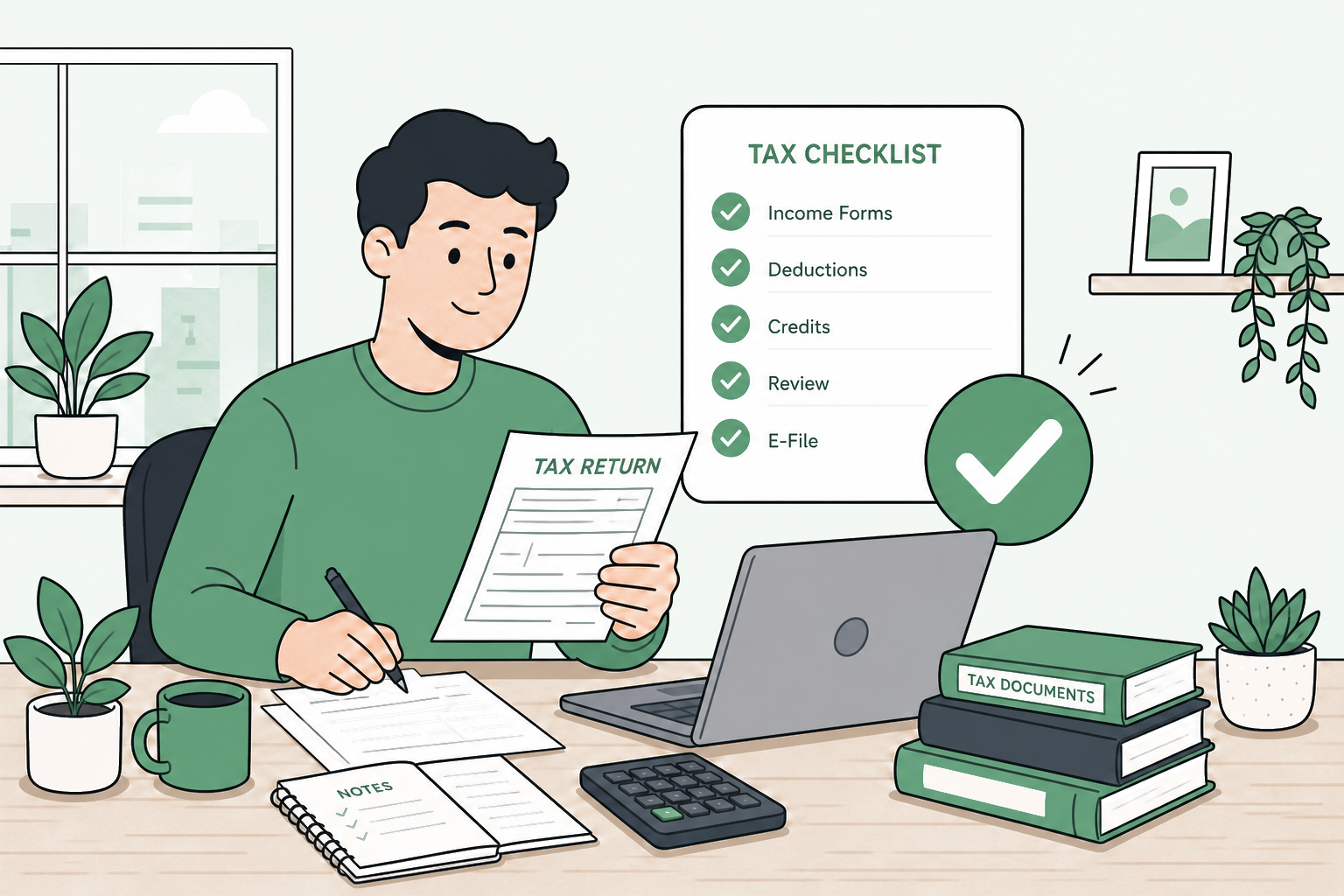
The IRS doesn’t tax every dollar the same way. Your gross income gets reduced by adjustments and deductions, then tax rates apply in brackets — and credits can cut the bill further.

Wages, self-employment, interest, dividends, capital gains — different buckets can be taxed differently.
Only the dollars inside a bracket get that rate. Moving up a bracket doesn’t re-tax everything at the higher rate.
Deductions shrink taxable income. Credits cut the tax bill dollar-for-dollar — often more powerful.
Pay-as-you-go via W-2 withholding or quarterly estimates. Too little → surprise bill; too much → interest-free loan to the IRS.
Optimization isn’t loophole hunting — it’s using the code as written: accounts, timing, documentation, and credits you qualify for.
401(k), traditional IRA, Roth IRA, HSA, and SEP/Solo 401(k) for self-employed — these change when you’re taxed and can slash today’s bill or tomorrow’s.
If your workplace matches retirement contributions, that’s a return you won’t find elsewhere. Leave it on the table and you’re giving money away.
Mileage, supplies, home office, education, charitable gifts — keep receipts and notes. Memory is not an audit defense.
Self-employed and investors can sometimes shift invoices, equipment buys, or capital gains across year-end to land in a better bracket.
Child Tax Credit, education credits, EITC, clean energy credits — eligibility rules change. A quick eligibility check beats leaving cash behind.
A huge refund often means you over-withheld all year. Aim for close-to-zero: keep more cash working for you monthly.
If eligible: deductible contributions, tax-free growth, tax-free medical withdrawals — one of the strongest tools in the code.
Pay tax now (Roth) or later (traditional). Higher current bracket → traditional often wins; expect higher future rates → Roth can shine.
Long-term gains usually get preferred rates. Holding over a year and tax-loss harvesting can matter for taxable brokerage accounts.
Federal isn’t the whole story. Check our U.S. tax map before a move or big income shift.
Tax optimization uses published rules. Tax evasion hides income or invents deductions — that’s a different (and illegal) game. When unsure, ask a pro.
New job, marriage, kid, side hustle — revisit your W-4 so April isn’t a surprise party.
Dedicated accounts make Schedule C cleaner and audits less painful. Why separation matters.
Self-employed: put estimate deadlines on the calendar. Late payment penalties add up quietly.
Summer is a great time to project your bill — while you can still change contributions and spending.
Accurate filing, deduction hunting, and calm process — personal, self-employed, and rideshare friendly.
Book tax prep → Gig workSchedule C worksheet for Uber/Lyft drivers — signed PDF ready for filing season.
Open form → ExploreHover any state for income and sales tax context.
Open map → Related401(k)s and IRAs are tax strategies and retirement strategies.
Dive in →This guide is general education, not tax advice for your specific return. Rules change and your situation may differ — talk to us or a qualified preparer before acting.